Tide~ is about enabling creative work responding to global issues from a teaching perspective. Teaching is fundamentally about enabling learners to form their own opinions and develop the confidence to have these challenged and developed through respectful discussions and debate, informed by knowledge and insights. This is an essence of living in a liberal democracy.
The values of such a democracy are at times usefully contested and debated, but they are also, all too often, undermined in all manner of ways. The Supreme Court finding that parliament was unlawfully prorogued in September 2019 is a clear example ... other examples are more subtle.
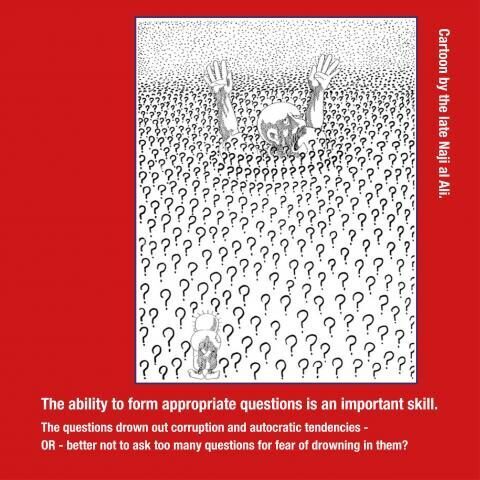
There is a need, from an educational perspective, to challenge such undermining when complex matters are presented with a simple certainty that closes down real learning. Such temptation to use schools to manipulate ideas is to be found in many organisations, political movements and even government. This is at the heart of what Elif Shafak asks us to consider. [See quote <<<< ]
It is useful to remind ourselves of the fundamentals that we value: an elected parliament with checks and balances; free and fair elections; the rule of law and the independence of the judiciary and the press; individual freedoms provided that you do no harm to others; the role of the state in promoting and protecting life, health and well-being of all, including laws to protect minorities and to promote equality.
There are global dialogues on our doorstep. The priorities for investment and economic development are as contested in the UK as they are in other countries. As are the models of development that either engage communities or impose plans on them.
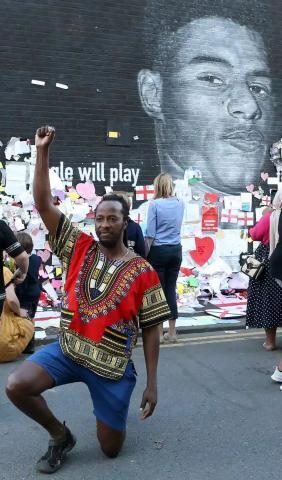
See for example: Euros 2021 and questions of racism
The death of George Floyd moved very many people from different backgrounds, across the world, to raise concerns about racism. Yet even a symbolic gesture like 'taking the knee' became the focus for division.
How do we generate open discussion about these matters?
How do we avoid trivialising the issues - as part of a 'culture war'?
The Government indicated that Black Lives Matter should not be promoted in schools. There was a risk that schools interpreted this to mean they should not discuss the issue at all. To do this, we would suggest, is to fail to meet young people's learning needs. An understanding of the cause is fundamental, if not BLM the organisation as such.
Looking at what happened at the European Football Championships in summer 2021 suggests that anti-racist sentiments are more widely held than seems to be assumed by some politicians and some media.
See ET 2.4 article: The 2021 Euros and questions about racism