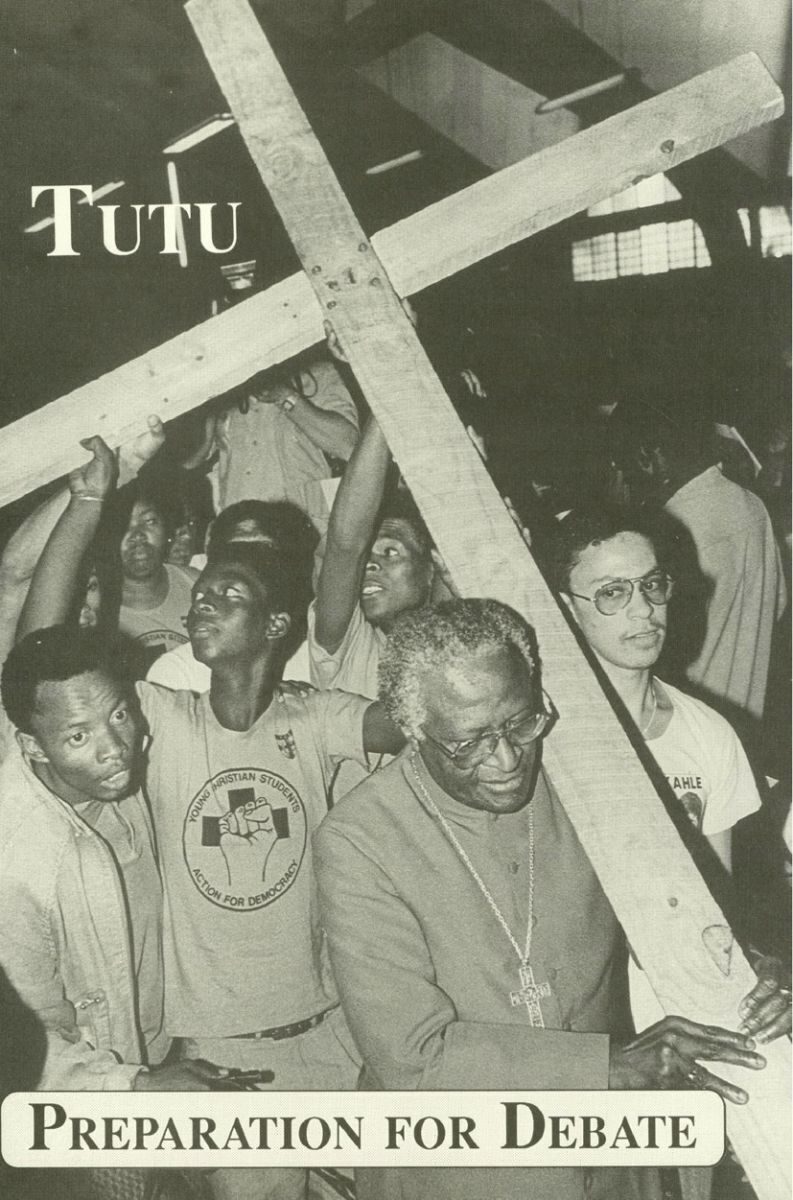
 This pack was quite literally a preparation for debate. Archbishop Desmond Tutu's visit to Birmingham for two weeks in April 1989 provided the stimulus: for setting up a group to put the pack together; and the many events that took place in schools. They built up to a major gathering for secondary schools with Archbishop Tutu at the National Exhibition Centre.
Desmond Tutu was an inspiration to the many people he met during the visit. His ideas and principles are central to the pack. They were important then. They are important now. Could they be a useful stimulus to thinking about Commonwealth 2022 plans?
There are many stories of his human qualities and humour, not least at Selly Oak Colleges, were he stayed.
Much of the pack is about South Africa and the implications of Apartheid. But it also highlights the importance of Tutu's ideas and principles - and the implications for us, our community and for Birmingham. It was recognised that there was a danger that a focus on the atrocities of apartheid and debating the need to support change in South Africa could add to a complacency about issues here in Birmingham.
The pack: a booklet with five sections and a set of photographs introduces Desmond Tutu and his visit and background about South Africa. Case studies of people, the photo-set and other resources are used to stimulate discussion about what it means to live within the apartheid system in South Africa. It also raised debates about supporting change.
In preparation DEC also set up a series of evening events for teachers and the wider community. Donald Woods created a particularly lively event that brought home to realities.
A collection of cartoons on Apartheid [see download below], published at about the same time in 'Thin Black Lines', is a useful stimulus to reflecting on the situation in South Africa.