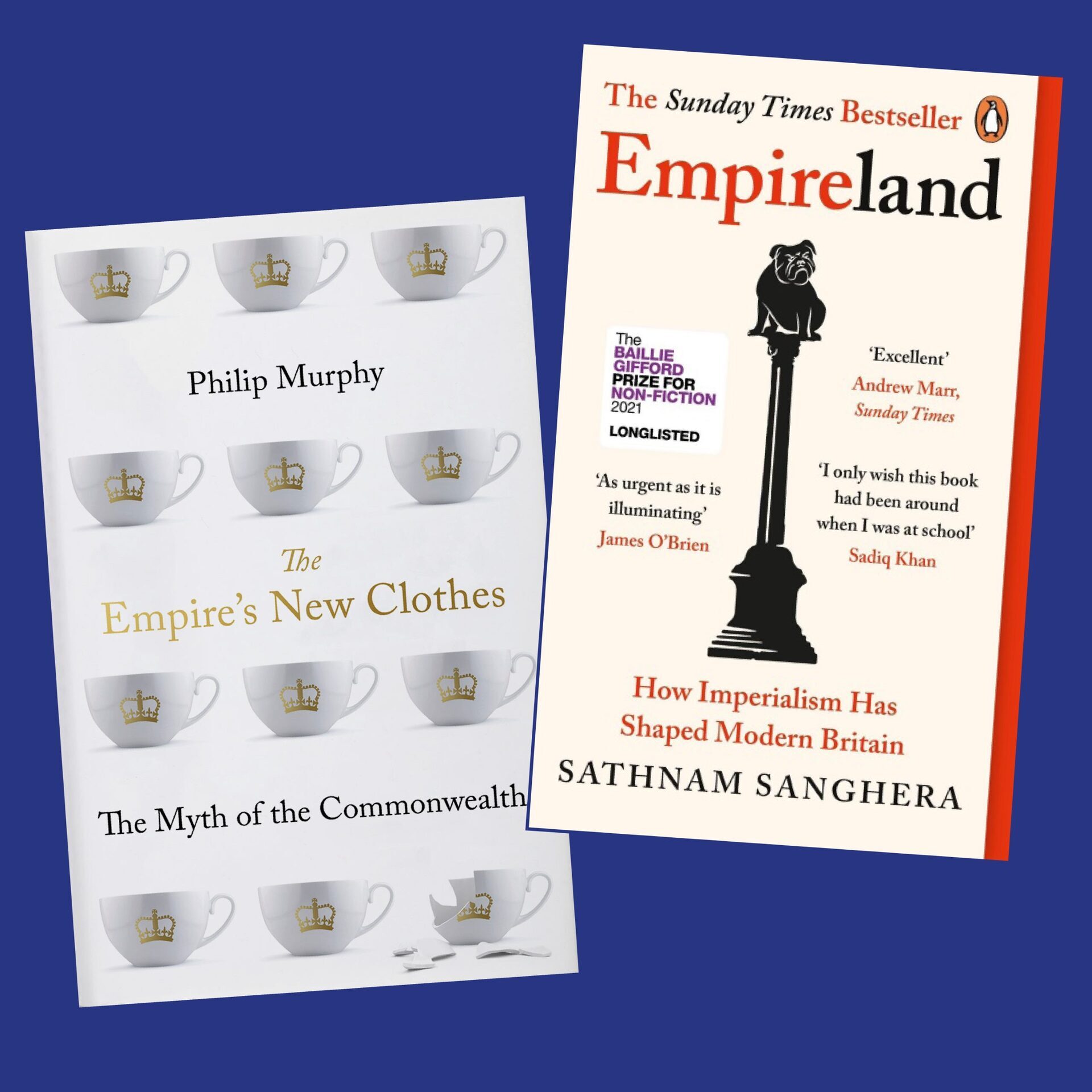
ET 2.2 offers reflections on 'Empireland' by Dorit Braun; Simon Huson; Darius Jackson; Audrey Osler; and a University of Worcester group [Rebecca Davidge, Elena Lengthorn & Rachael Moore].
Both Sathnam Sanghera & Philip Murphy suggest a move away from collective amnesia, to engage with realities of the past but in a way that enables positive thinking about the future.
Sathnam Sanghera advocates finding ways forward, that greater awareness will lead to positive outcomes. There is a need to make contested matters more accessible to learners and to avoid simplistic, ridiculous all-encompassing questions - such as: Was the Empire a good or bad thing? 500 years of history was more complex than that.
Philip Murphy offers a thorough overview of the Commonwealth. He brings it up to date with post-Brexit debates. He asks if it can ... "escape from the shadow of the British Empire to become an organisation based on shared values, rather than a shared history."
Such a vision is challenged by those who assume that, post- Brexit, Britain can take a new lead role, using the Commonwealth to develop new in trade partnerships and also selective immigration control.
The chapter on 'Guilt' raises questions about 'cover up' … about ways that understanding the history has been actively avoided by the political establishment. This is not constructive in terms of young people's understanding - or their capacity to consider our future role in the world.
Prince Charles [now King Charles] endorsed that sentiment speaking for the Crown in Barbados [November 2021] marking the transition from the Queen as head of state to becoming a republic. Barbados remains a Commonwealth member.
He said …
"From the darkest days of our past, and the appalling atrocity of slavery, which forever stains our history, the people of this island forged their path with extraordinary fortitude."
Is there potential, beyond special events like The Games, for the idea of Commonwealth Awareness?